

🎄🔬Science-Translated Advent Calendar🔬🎄
24 days, 24 facts - perfect material for impressing (or annoying) relatives at the Christmas dinner table.

01
Your ear was once a jaw (in a way)
Two of the tiny bones in your middle ear (the malleus and incus) originally formed part of the jaw joint in early vertebrate ancestors.
Over millions of years, evolution repurposed these bones, transforming them into key components of the mammalian hearing system.
Biology rarely invents new parts, it remodels what is already there.
02
You technically have cancer
Right now, inside you, tiny cancer-like cells are appearing (and being eliminated) without you ever noticing.
Every day, billions of your cells copy their DNA.
Some of them make mistakes big enough to push them toward becoming cancer, but almost none of these ever turn into a tumor.
Why?
The moment a cell behaves suspiciously (dividing too fast, expressing the wrong proteins, ignoring signals) your immune system marks it for destruction.
Most “cancers” die before they even are cancers.
Disease begins only when one mutated cell manages to
hide, grow faster than the immune system can react, or
reprogram its surroundings to protect it.


03
You glow in the dark (a little).
The human body emits visible light, we’re just not sensitive enough to see it.
Every cell in your body produces energy using oxygen.
During this process, small amounts of that oxygen become excited, creating tiny flashes of light known as biophotons.
These flashes:
- follow your daily circadian rhythm
- are brightest in the face
- and peak in the late afternoon.
Some animals use bioluminescence to communicate, hunt, or mate.
04
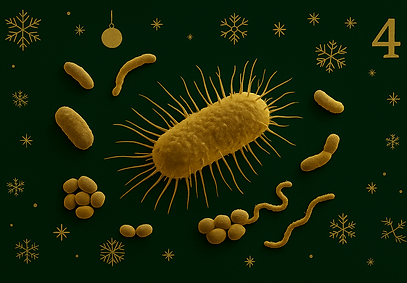
You are more microbe than Human
Your body houses trillions of microbes (bacteria, viruses, fungi, archaea) living on your skin, in your mouth, and especially in your gut.
Your microbial cells rival or even outnumber your human cells.
For every human cell in your body, there’s roughly one microbe living alongside it. Together, they form your microbiome, an ecosystem so essential that some scientists call it another organ.
These microbes help you:
- digest food
- produce vitamins
- train your immune system
- protect against harmful bacteria
- and even influence your mood and behaviour
05

You replace your entire skeleton roughly every 10 years.
Every bone in your body is alive.
Right now, your skeleton is being broken down and rebuilt by two groups of cells:
- osteoclasts (the demolition team)
- osteoblasts (the construction crew)
Bone remodelling never stops.
It responds to stress, movement, nutrition, hormones, even sunlight.
The bones you have today are not the bones you had a decade ago.
This constant renewal allows your skeleton to:
- repair micro-damage
- adjust to new loads (like strength training)
- store and release minerals
- stay strong despite daily stress
Your bones may feel rigid, but biologically, they’re more like a highly active construction site.
06
Your muscles remember your workouts… even years later.
When you train, your muscles don’t just get bigger, they change how their DNA is used.
Strength training adds extra nuclei to your muscle fibers and leaves behind epigenetic marks that adjust gene activity.
Even if you stop training and lose the visible muscle, many of these molecular changes stay.
This means:
It’s easier to rebuild lost muscle than to build it the first time.
Your muscles literally store a biological memory of past workouts.
So yes, your former gym-self left you a gift.

07

Your brain cleans and edits itself while you sleep
When you fall asleep, your brain starts a night shift.
It actually shrinks slightly, creating more space for cerebrospinal fluid to wash through and clear out metabolic waste including proteins linked to neurodegenerative diseases.
But cleaning is only half the story.
During deep sleep, your brain also:
- strengthens important memories
- weakens or deletes irrelevant ones
- reorganises connections to make room for tomorrow’s learning
Sleep isn’t passive.
It’s maintenance, memory editing, and neural housekeeping, all happening while you lie still.
08
Your immune system remembers for decades.
Some vaccines, as well as some infections leave behind a biological memory that can last 40 years or more.
Inside your lymph nodes and bone marrow live long-lived memory B cells and plasma cells.
These cells don’t just float around waiting. They actively keep a record of past threats:
- the virus you met as a child,
- the bacteria you fought in school,
- the vaccine you got in your teens.
How does this memory actually work?
When your body fights an infection for the first time, it tests millions of slightly different immune cells to see which ones work best.
Most disappear again, but the winners are saved.
Some become memory cells, quietly patrolling your body for years.
Others settle into your bone marrow and keep making tiny amounts of antibodies in the background, like a smoke detector that never turns off.
If the same germ ever returns, these memory cells react within hours, long before you start feeling sick.
That’s why second infections are often milder, or don’t happen at all.


09
Your body makes alcohol every day
Even if you never drink, your body still produces small amounts of ethanol on its own.
How?
Inside your gut, bacteria break down carbohydrates and release tiny traces of alcohol (a process known as endogenous fermentation).
Your liver immediately detoxifies it, so you don’t feel anything.
In most people, these alcohol levels stay extremely low.
But there are rare cases where certain gut microbes overgrow and produce so much alcohol that people can actually feel intoxicated (a condition called auto-brewery syndrome).
10
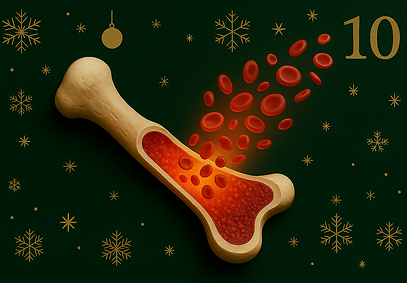
Your bones make blood
Most people think of bones as hard, solid structures, but inside, they house one of the busiest factories in your entire body.
Your bone marrow produces:
- red blood cells (around 2 million per second!)
- white blood cells (your immune defenders)
- platelets (for clotting and healing)
This process, called hematopoiesis, runs nonstop from before you’re born until the end of your life.
The marrow inside your ribs, spine, pelvis, and long bones contains stem cells that can transform into any blood cell type your body needs, for more oxygen transport during exercise, more immune cells during infection, more platelets when you’re healing a wound.
Your skeleton isn’t just holding you up.
It’s keeping you alive from the inside out.
11

You get completely new skin every 4 weeks
Your skin looks solid and stable, but it’s actually one of the fastest-renewing organs you have.
Every minute, you shed around 30,000 dead skin cells.
Most of the dust in your home?
Yes, that’s (partially) you.
Meanwhile, new cells constantly rise from deeper layers of the epidermis, where they divide, flatten, link together like tiny tiles, fill with protective keratin, and migrate upward until they form the fresh barrier that replaces the ones you lose.
Within about 28 days, your entire outer skin layer has been swapped out for a new one.
You’re regenerating all the time. Quietly, invisibly, and without noticing.
12
Your sense of smell is directly wired into your memory
Smells don’t just “seem” nostalgic, they truly are!
That’s because your olfactory system is the only sensory pathway that goes straight into the brain’s memory and emotion centers without passing through the usual filters.
When you smell something:
- signals go directly to the amygdala (emotion)
- and the hippocampus (memory formation)
No other sense has this VIP shortcut.
That’s why a single smell (sunscreen, cinnamon, wet pavement) can instantly transport you to a moment you haven’t thought about in years.
Your nose is basically a time machine with scent triggers.

13

Humans can’t actually feel “wet.”
It feels obvious that we can sense when something is wet.
But biologically speaking, your skin has no receptors for wetness.
Instead, your brain senses wetness by combining different signals:
- temperature (wet things are often cold),
- pressure on the skin,
- movement across the surface.
Put these together, and your brain concludes: this must be wet.
That’s why:
- cold metal can feel wet
- warm water can sometimes feel dry
“Wet” isn’t a real sense.
It’s a clever illusion created by your nervous system.
14
Your tongue doesn’t have “taste zones”.
You may have seen the classic diagram showing sweet at the tip of the tongue, bitter at the back, and salty on the sides.
That diagram is wrong.
In reality, every taste bud can detect all five basic tastes:
sweet, salty, sour, bitter, umami.
Some areas are slightly more sensitive than others, but there are no strict zones where only one taste works.
What we call “taste” is actually a combination of signals:
taste buds on the tongue, smell from the nose, temperature and texture.
That’s why food tastes flat when your nose is blocked. Your tongue still works, but a major part of flavour perception is missing.
Taste isn’t mapped to zones.
It’s built from multiple senses working together.

15

You are slightly radioactive.
You might not feel it, but your body naturally emits tiny amounts of radiation, and that’s completely normal.
This happens because your body contains naturally radioactive elements, especially potassium-40 (K-40) and carbon-14 (C-14).
These atoms slowly decay as part of normal chemistry inside your cells.
The radiation is harmless and extremely weak, but sensitive instruments can measure it. Scientists even use this natural radioactivity to study metabolism and to date biological material.
It’s not something you feel or see, just a reminder that physics doesn’t stop at the skin.
16
Your eyes are never truly still.
Even when you think you’re staring at something without moving your eyes, they are constantly in motion.
Your eyes make tiny, involuntary movements called microsaccades, along with even smaller drifts and tremors. These movements happen several times per second and are controlled automatically by your nervous system.
Why does this matter?
If an image stays perfectly still on the retina, the light-sensitive cells quickly adapt and stop responding.
In simple terms:
a perfectly stable image fades away.
Microsaccades prevent this by constantly shifting the image by a tiny amount:
- fresh photoreceptors are stimulated,
- visual signals stay active,
- details remain sharp and visible.
If scientists artificially stabilise an image on the retina, people report that it disappears within seconds.
So when you think you’re holding a steady gaze, your visual system is quietly making thousands of micro-adjustments for you.

17

Plants make their own (as well as our) painkiller when they’re attacked.
When plants are injured (for example by insects or pathogens) they produce a chemical called salicylic acid.
In plants, salicylic acid acts as an alarm signal:
- it activates defense genes,
- helps limit infections,
- and can even warn other parts of the plant that danger is coming.
This molecule plays a central role in plant immunity.
Here’s the surprising part:
Humans use a closely related compound as a painkiller.
Salicylic acid was originally isolated from willow bark, which has been used for pain relief for thousands of years.
Modern medicine later modified it into acetylsalicylic acid (ASA), better known as aspirin.
So when you take aspirin for a headache, you’re using a refined version of a plant defense chemical.
18
Your DNA sequence stays the same, but gene activity is constantly regulated.
The nucleotide sequence of your DNA is largely fixed for life.
What changes continuously is gene expression (which genes are transcribed, how strongly, and in which cells).
This regulation happens mainly through two epigenetic mechanisms:
- DNA methylation, which can reduce or silence gene transcription
- Histone modifications, which change how tightly DNA is packed and how accessible genes are
These chemical modifications control whether transcription machinery can access a gene, without changing the genetic code itself.
A concrete example:
Stress hormones such as cortisol can trigger changes in DNA methylation in immune and brain cells, temporarily altering the expression of stress-response genes. When conditions change, some of these marks can be reversed.
Epigenetic regulation is essential for normal biology.
It explains how the same genome produces neurons, muscle cells, or immune cells, and how cells adapt gene activity to stress, nutrition, inflammation, and sleep.

19

A large part of your oxygen doesn’t come from trees.
A significant fraction of the oxygen in Earth’s atmosphere is produced by microscopic organisms in the ocean.
Marine phytoplankton (including algae and cyanobacteria) perform photosynthesis, using sunlight to convert carbon dioxide into organic matter and oxygen. Despite their tiny size, their global impact is enormous.
Taken together, these organisms are responsible for around half of the planet’s total oxygen production.
They also form the foundation of marine food webs and play a central role in regulating atmospheric carbon dioxide and climate processes.
In other words:
much of the air you breathe is shaped not only by forests, but by life drifting in the oceans.
20
Pain is not a direct measure of tissue damage.
Pain is not produced at the site of injury alone.
Specialised sensory receptors (nociceptors) detect potentially harmful stimuli such as extreme heat, pressure, or chemical signals. These signals are transmitted to the spinal cord and brain, where they are integrated with information about context, expectations, emotions, and past experiences.
The brain then decides whether generating pain is useful for protecting the body.
This is why pain can vary so widely: similar injuries can feel very different, pain can persist after tissues have healed, and strong emotions such as fear or stress can amplify pain perception.
Conversely, in acute danger, pain may be temporarily suppressed to allow escape or action.
Pain is therefore a real experience, but it reflects a protective evaluation by the nervous system, not a direct measurement of damage.

21
Hemoglobin links humans to almost all other life on Earth.

Hemoglobin is best known as the protein that carries oxygen in human blood. But it isn’t a uniquely human invention.
Hemoglobin belongs to a much older protein family called globins. These these proteins are found across nearly all forms of life.
Globins exist in:
- Bacteria, where they help manage oxygen and reactive gases.
- Plants, where they regulate oxygen and nitric oxide inside cells.
- Fungi, invertebrates, and vertebrates, in many different tissues and roles.
From an evolutionary perspective, globins appeared very early, long before complex animals existed. As oxygen levels on Earth changed, this same basic protein structure was repeatedly adapted for different biological needs.
In humans, this ancient solution became hemoglobin. A highly specialised system for oxygen transport in blood.
In other organisms, the same molecular framework is used for local regulation and protection.
The key point isn’t that everything has hemoglobin.
It’s that the same molecular strategy connects microbes, plants, animals.
22
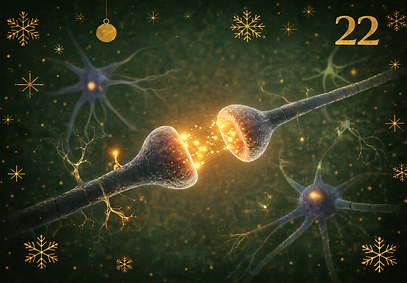
Your brain physically rewires itself when you learn.
Learning isn’t just a metaphorical process. It leaves measurable, structural traces in the brain.
When you acquire new skills or knowledge, neurons strengthen or weaken their connections through a process called synaptic plasticity. Frequently used connections become more efficient, while unused ones are gradually pruned away. This reshaping happens through changes in synapse size, receptor density, and even the growth of new dendritic spines.
At the same time, supporting cells like astrocytes and oligodendrocytes adapt as well, fine-tuning signal transmission and energy supply. In some brain regions, such as the hippocampus, new neurons can even be generated in adulthood.
Your experiences are continuously rewriting the physical wiring of your brain. Not just during childhood, but throughout life.
23
You don’t feel your organs touching each other.

Inside your body, your organs are constantly moving.
Your lungs slide against the chest wall when you breathe.
Your intestines shift when you walk.
Your heart moves with every beat.
Yet you feel none of this.
That’s because most internal organs lack the kind of sensory receptors needed for precise touch perception. Instead, they are mainly sensitive to:
- stretch,
- pressure,
- and chemical signals.
The smooth movement is made possible by thin fluid-filled layers (like the pleura and peritoneum) that reduce friction to almost zero.
As long as everything moves normally, the brain receives no meaningful signal.
Pain or discomfort usually appears only when:
- inflammation increases friction,
- tissues are overstretched,
- or movement becomes abnormal.
Silence inside the body isn’t absence of motion, it’s absence of alarm.
24
Parts of you come from other human species.
Modern humans did not evolve in isolation.
As Homo sapiens migrated out of Africa, they encountered and interbred with other human groups, including Neanderthals and Denisovans.
These encounters left a lasting genetic legacy.
Today, most people whose ancestors lived outside Africa carry a small but biologically meaningful fraction of DNA inherited from these archaic humans.
People of Eurasian ancestry carry around 1–2% Neanderthal DNA, with some variation between individuals and populations
Importantly, many of these introgressed genes were adaptive, meaning they improved survival in unfamiliar environments.
They contributed to:
- Defense against pathogens, shaping immune responses to new viruses and bacteria
- Pigmentation, helping regulate UV exposure at different latitudes
- High-altitude adaptation, most famously in Tibetan populations via Denisovan-derived variants
- Metabolism, influencing energy use, fat storage, and glucose regulation
Evolution did not simply replace earlier humans. It integrated them.
